
Patient no-show rate

Mohammed Jamil Nasir
Founder – Product & Technology, Surgy Health · Last reviewed 25 November 2026
Definition
The patient no-show rate is the percentage of booked appointments where the patient neither attended nor cancelled in time. A systematic review of 105 studies found an average no-show rate of about 23%, highest in Africa (43%) and lowest in Oceania (13.2%).
Formula
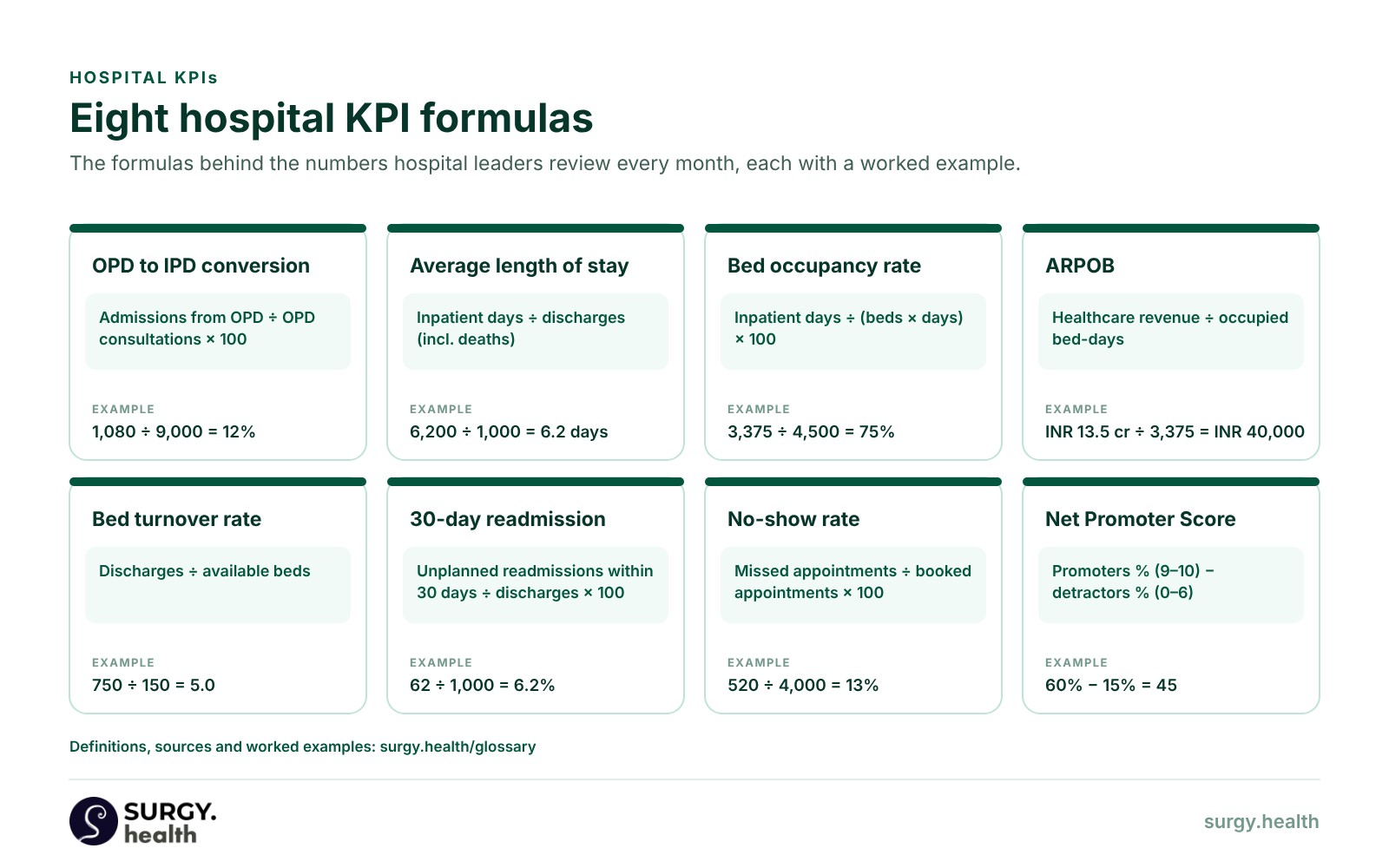
No-show rate = (missed appointments) ÷ (booked appointments) × 100
Worked example
| Input (one month) | Value |
|---|---|
| Booked appointments | 4,000 |
| No-shows | 520 |
| No-show rate | 520 ÷ 4,000 × 100 = 13% |
What predicts a no-show
Across the 105 studies, the strongest predictors were a long gap between booking and appointment, and a history of previous no-shows.
Fixes that work
- A reminder the day before with one-tap confirm and reschedule.
- Shorter lead times for new and follow-up visits.
- A same-day call to patients with a history of missed visits.
- Release confirmed-cancelled slots to the waitlist.