

AI in Healthcare Statistics 2026: 100+ Data Points from Primary Sources
Primary-source AI in healthcare statistics for 2026: physician and hospital adoption, FDA AI devices, AI scribes, patient trust, plus India and GCC data.


Key takeaways
- 72% of US physicians actively use AI in 2026, up from 38% in 2023, and 71% of US acute-care hospitals run predictive AI inside their EHR.
- The FDA's AI-enabled medical device list passed 1,614 entries after a record 335 authorisations in 2025; 76.2% of listed devices are radiology tools.
- Ambient AI scribes cut clinician burnout from 51.9% to 38.8% in 30 days, but the time saved is minutes per day unless the workflow around the note changes too.
- 72% of US adults want to be told when AI is used in their care, while 65.8% have low trust that their health system will use AI responsibly.
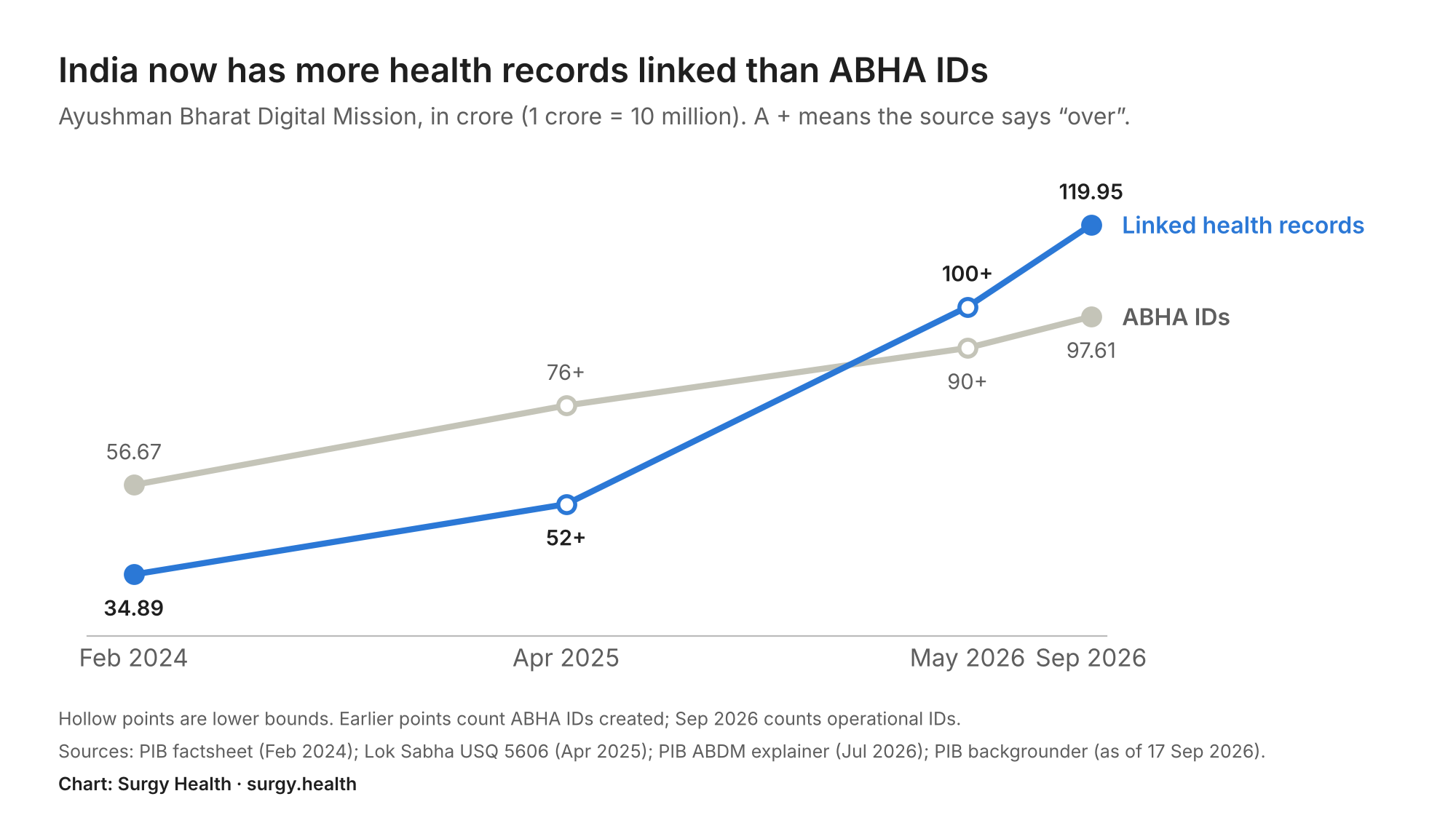
- India has linked 119.95 crore health records to 97.61 crore ABHA IDs, and only 15–20% of roughly 50,000 daily PM-JAY claims are auto-adjudicated.
Most "AI in healthcare statistics" pages recycle the same market-size forecasts from firms nobody can audit. This one doesn't. Every number below comes from a government body, a peer-reviewed journal, or the organisation that actually ran the survey, and each links straight to that original source.
We build AI software for hospitals in India and the GCC, so reading this research is part of our day job. We put this page together after one too many afternoons spent tracing a popular stat back to its "source", only to find a vendor blog quoting another vendor blog.
Start with these ten numbers. The full set, with context and caveats, follows.
10 healthcare AI numbers worth remembering
| Number | What it tells you | Source |
|---|---|---|
| 81% | US physicians aware of or using AI in their practice; 72% actively use it, up from 38% in 2023 | AMA, 2026 |
| 71% | US acute-care hospitals running predictive AI inside their EHR in 2024 | ASTP/ONC, 2025 |
| 1,614 | AI-enabled medical devices on the FDA's list, after a record 335 were authorised in 2025 | Surgy Health analysis of FDA data, 2026 |
| 76.2% | Share of those FDA-listed AI devices that sit in radiology | Surgy Health analysis of FDA data, 2026 |
| 29% | More breast cancers found with AI-supported screening, with 44% less reading work | Lancet Digital Health, 2025 |
| 51.9% → 38.8% | Clinician burnout before and after 30 days with an ambient AI scribe | JAMA Network Open, 2025 |
| 72% | US adults who say providers should tell them when AI is used in their care | Pew Research Center, 2026 |
| $1.4 billion | US spending on healthcare-specific generative AI tools in 2025, nearly triple 2024 | Menlo Ventures, 2025 |
| 97.61 crore | ABHA digital health IDs in India, with 119.95 crore health records linked to them | PIB, Sep 2026 |
| 16 million+ | Virtual appointments and consultations at Saudi Arabia's SEHA Virtual Hospital in 2025 | Saudi MoH, 2026 |
How we sourced these numbers
We held every statistic to one rule: it has to come from the people who produced it.
- Three source types only. Government and intergovernmental bodies (FDA, HHS, CMS, WHO, India's MoHFW and NHA, Saudi MoH, Abu Dhabi DoH), peer-reviewed journals (JAMA, NEJM AI, The Lancet, Nature Medicine and others), and organisations that ran the research themselves (AMA, Pew, KFF, Gallup, Elsevier, Philips, Menlo Ventures, Rock Health).
- No market-size forecasts. "AI in healthcare will be worth $X by 2034" figures are left out on purpose. They can't be checked, and they rarely agree with each other.
- Every number checked at source. We opened each report or paper and matched the figure. Where a journal was paywalled, the number comes from its published abstract.
- Caveats stay attached. We note sample sizes, survey dates, geography and vendor funding. Much of the best data is US-only, and we say so where it matters.
- The FDA figures are our own analysis. We downloaded the FDA's AI-Enabled Medical Devices list (update dated 4 September 2026, covering decisions up to 29 June 2026) and counted devices by year, review panel and submission type.
We refresh this page when new editions land. Spot something out of date? Write to info@surgyy.com.
How many doctors use AI? Physician and clinician adoption
In roughly three years, AI went from something doctors read about to something most of them use. The open questions now are about trust, training and who gets a say.
- 81% of US physicians reported awareness or use of AI in their practice in 2026, and 72% use it for at least one task, against 38% when the AMA first asked in 2023. The survey covered 1,692 physicians. (AMA, 2026)
- 66% of physicians said they used health AI in 2024, up from 38% in 2023, a 78% jump. The AMA's 2026 report later reclassified that 66% as "awareness or use". (AMA, 2025)
- 57% of physicians said cutting administrative burden through automation is AI's biggest opportunity. (AMA, 2025)
- 85% of physicians want to be consulted on, or responsible for, bringing AI into their practice. (AMA, 2026)
- 88% of physicians have at least some concern about losing clinical skills because of AI, and 70% worry about trainees losing theirs. (AMA, 2026)
- 49% of clinicians worldwide use AI for work, up 23 percentage points from 2024, in a survey of 2,757 clinicians across 118 countries. (Elsevier Clinician of the Future, 2026)
- 41% of nurses use AI for work, against 57% of doctors, and only 42% of nurses call today's AI tools trustworthy. (Elsevier, 2026)
- 25% of UK GPs use generative AI in clinical practice, most often for post-consultation documentation, yet 95% have had no training in these tools. (Blease et al., Digital Health, 2025)
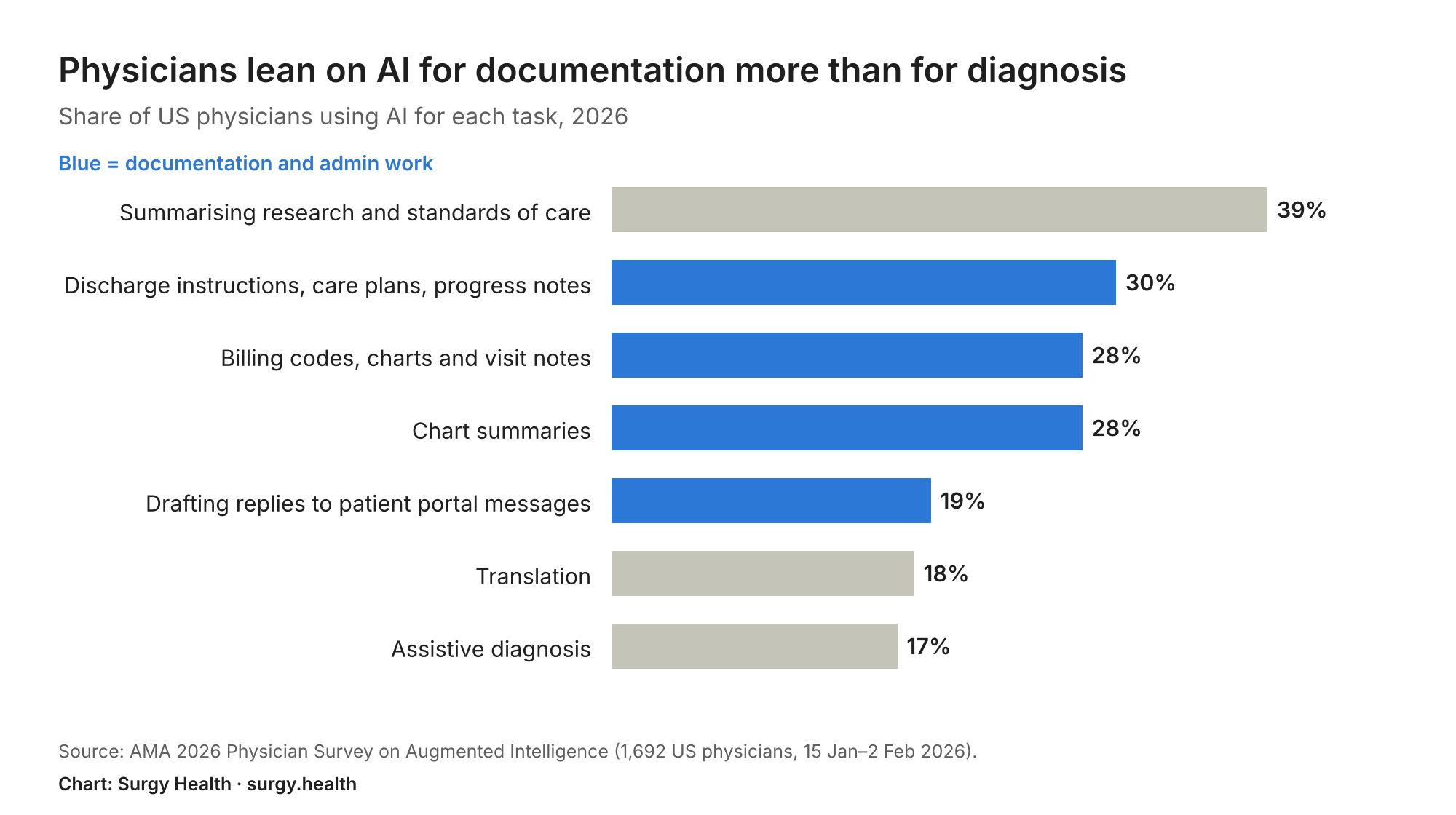
A note on the trend line: the AMA's headline figures count "awareness or use". On strict use, the comparison is 38% in 2023 against 72% in 2026, so nearly double rather than more. Both surveys are self-reported and US-only.
What percentage of hospitals use AI? Hospital and health-system adoption
Most large US hospitals already run AI somewhere in their workflow. The real story is the gap between them and everyone else, and where the growth is coming from: billing and scheduling, not bedside diagnosis.
- 71% of US non-federal acute care hospitals used predictive AI integrated with their EHR in 2024, up from 66% in 2023. (ASTP/ONC Data Brief No. 80, 2025)
- 37% of independent hospitals used predictive AI in 2024, against 86% of hospitals in multi-hospital systems. Rural hospitals sat at 56% and critical access hospitals at 50%. (ASTP/ONC, 2025)
- 61% of AI-using hospitals applied it to billing automation in 2024, up from 36% a year earlier. Scheduling use rose from 51% to 67%. (ASTP/ONC, 2025)
- 80% of AI-using hospitals run models supplied by their EHR developer. Third-party models fell from 59% to 52%, and self-built models from 54% to 50%. (ASTP/ONC, 2025)
- 31.5% of US hospitals had generative AI integrated with their EHR in 2024, and another 24.7% planned to add it within a year. (Everson et al., JAMA Network Open, 2025)
- 50% of US healthcare organisations reported implementing generative AI by Q4 2025, up from 25% two years earlier. The survey covered 150 payers, providers and health-tech firms. (McKinsey, 2026)
- 27% of US health systems have implemented domain-specific AI tools, against 22% of healthcare organisations overall. (Menlo Ventures, 2025)
- 100% of 43 large US health systems reported adoption activity for ambient clinical notes, the only AI use case to hit every respondent. 77% named immature AI tools as a top barrier. (Poon et al., JAMIA, 2025)
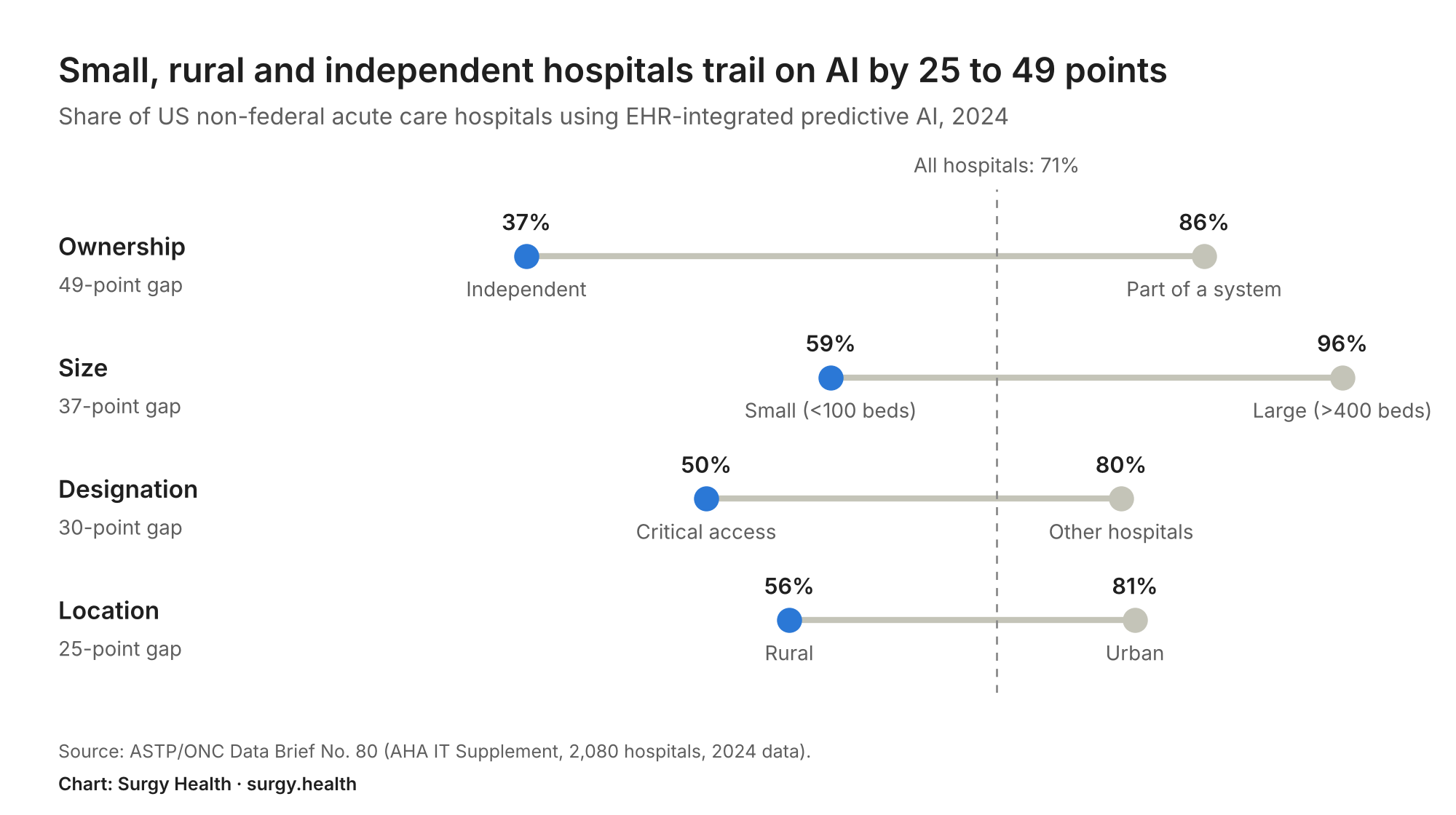
The pattern matters outside the US too. AI arrives first where there is an EHR vendor bundling it, an IT team to vet it, and a system budget to pay for it. That leaves out a lot of mid-sized independent hospitals, in India and the GCC as much as in rural America. Tools that let operations teams ask plain-language questions of their own data, like our conversational hospital analytics, are one way to close that gap without a data science team.
How many FDA-approved AI medical devices are there? Our analysis of the FDA list
The FDA's list of AI-enabled medical devices passed 1,600 entries in 2026, and 2025 was the busiest year on record. Rather than quote someone else's count, we downloaded the list and counted it ourselves.
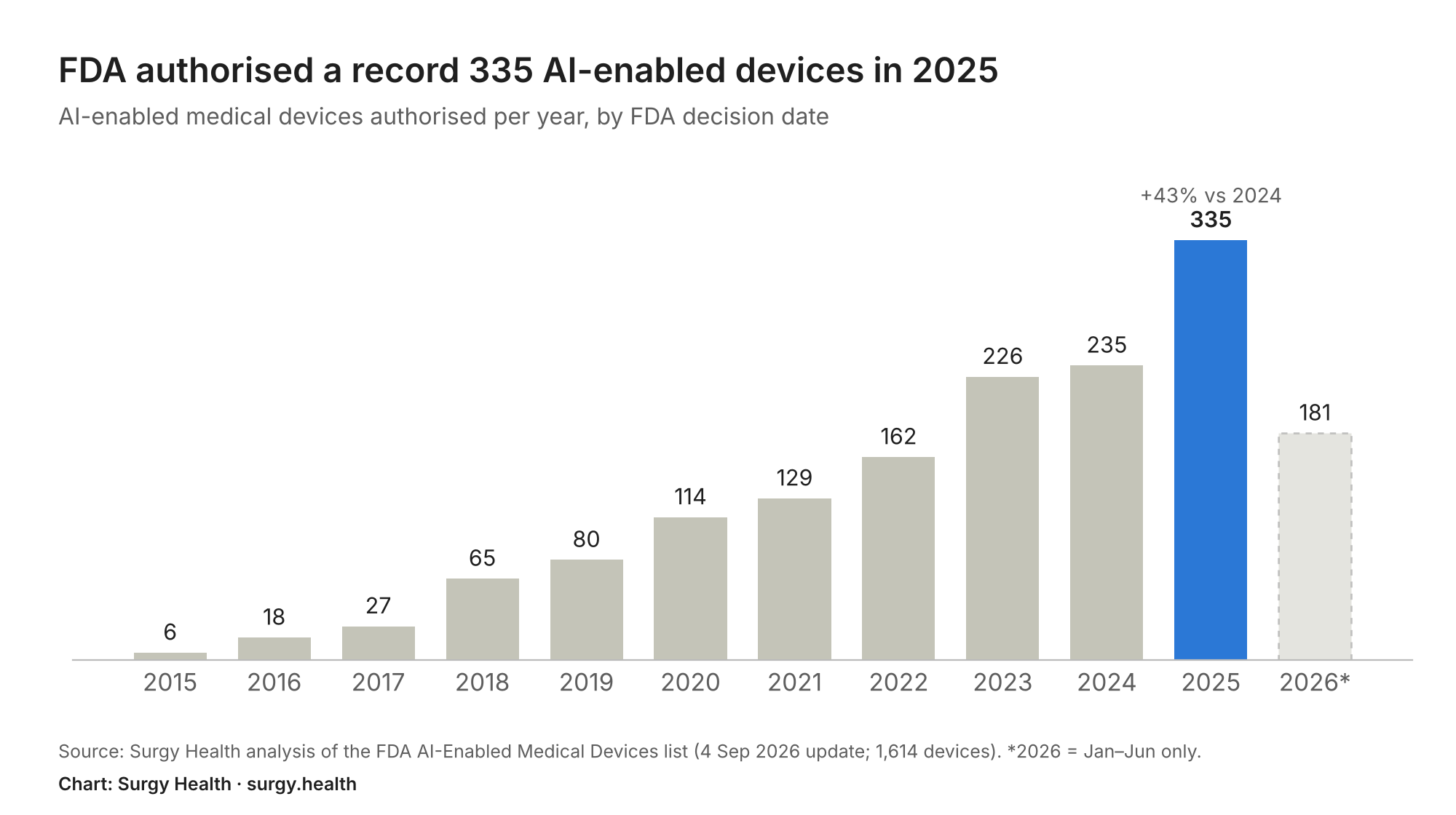
- 1,614 AI-enabled medical devices sit on the FDA's list as of its 4 September 2026 update, covering decisions up to 29 June 2026. They come from 817 different companies.
- 335 devices were authorised in 2025, a record and 42.6% more than the 235 authorised in 2024.
- 181 devices were authorised from January to June 2026, slightly ahead of the 176 in the same months of 2025.
- 60.5% of every AI device on the list was authorised in January 2023 or later.
- 76.2% of the devices (1,230) are radiology tools. Cardiovascular is a distant second at 9.5% (154), followed by neurology at 4.5% (73).
- 24.2% of 2025 authorisations were outside radiology, up from 13.2% in 2020. Radiology's grip is loosening, just slowly.
- 96.2% of the devices were cleared through the 510(k) pathway, which rests on equivalence to a device already on the market. 2.5% went through De Novo and 1.3% through premarket approval (PMA).
- The list doesn't yet flag devices built on foundation models or LLMs. The FDA says it will explore how to tag them in a future update, and in August 2026 it opened a consultation on regulating generative-AI devices, with comments due 19 October 2026. (FDA, 2026)
A clearance is not the same as proof of benefit. Three peer-reviewed audits of the FDA's AI devices show how thin the evidence can be:
- Only 55.9% of 903 FDA-cleared AI devices reported a clinical performance study, and just 2.4% of those studies were randomised. (Windecker et al., JAMA Network Open, 2025)
- 6.3% of 950 AI devices were linked to recalls, and 43.4% of those recall events came within a year of clearance. Public companies held 53.2% of the devices but 91.8% of the recalls. (Lee et al., JAMA Health Forum, 2025)
- Only 3.6% of 692 FDA AI device summaries reported the race or ethnicity of study patients, and 99.1% gave no socioeconomic data. (Muralidharan et al., npj Digital Medicine, 2024)
How we counted. We downloaded the CSV from the FDA's AI-Enabled Medical Devices page, grouped entries by the year of the final decision, and used the FDA's lead review panel as the specialty. The FDA itself notes the list is not exhaustive; it is built from AI-related terms in device summaries. Counts for earlier years can shift slightly as the FDA adds older devices.
Does AI improve patient outcomes? What the clinical evidence shows
The strongest evidence sits in imaging, sepsis and cardiology, where randomised trials now exist. The gains are real but uneven, and one famous sepsis model shows what happens when nobody checks a tool before trusting it.
- 29% more breast cancers found. In the MASAI randomised trial of 105,934 women in Sweden, AI-supported screening detected 6.4 cancers per 1,000 women against 5.0 with standard double reading. It also cut screen-reading workload by 44.2%. (Hernström et al., Lancet Digital Health, 2025)
- 80.5% vs 73.8% sensitivity. MASAI's final results showed AI-supported screening caught more cancers with no loss of specificity (98.5% in both arms). Interval cancers were non-inferior, at 1.55 vs 1.76 per 1,000. (Gommers et al., The Lancet, 2026)
- 17.6% higher detection in the real world. Germany's PRAIM study of 463,094 women found AI-supported reading detected 6.7 cancers per 1,000 against 5.7, with no rise in recalls. (Eisemann et al., Nature Medicine, 2025)
- 18.7% fewer sepsis deaths. When clinicians confirmed a TREWS sepsis alert within three hours, in-hospital sepsis mortality fell 18.7% in relative terms. The system monitored 590,736 patients across five hospitals. (Adams et al., Nature Medicine, 2022)
- 67% of sepsis cases missed. The widely used Epic Sepsis Model scored an AUC of only 0.63 at external validation. It missed 67% of sepsis patients and still alerted on 18% of all hospitalised patients. (Wong et al., JAMA Internal Medicine, 2021)
- 3.6% vs 4.3% 90-day mortality. In a randomised trial of 15,965 hospitalised patients in Taiwan, an AI-ECG alert system lowered all-cause deaths at 90 days (hazard ratio 0.83). (Lin et al., Nature Medicine, 2024)
- 2.1% vs 1.6% new low-ejection-fraction diagnoses. Sharing AI-ECG results with primary care teams raised new diagnoses of low ejection fraction across 22,641 patients (odds ratio 1.32). (Yao et al., Nature Medicine, 2021)
- 11.2 minutes faster stroke treatment. Automated detection of large-vessel-occlusion strokes cut door-to-groin-puncture time in a cluster randomised trial at four stroke centres. (Martinez-Gutierrez et al., JAMA Neurology, 2023)
- 100% vs 22% eye-exam completion. Point-of-care autonomous AI got every young person with diabetes in the trial screened for retinopathy, against 22% of those referred to an eye specialist. (Wolf et al., Nature Communications, 2024)
- 87.2% sensitivity, 90.7% specificity. That was the pivotal-trial performance of the first FDA-authorised autonomous AI diagnostic, which screens for diabetic retinopathy in primary care. (Abràmoff et al., npj Digital Medicine, 2018)
Large language models: strong on paper, mixed with doctors in the loop
- 76% vs 74%. In a randomised trial of 50 physicians, access to GPT-4 did not significantly improve diagnostic reasoning scores. GPT-4 working alone scored 16 percentage points higher than physicians using conventional resources. (Goh et al., JAMA Network Open, 2024)
- 6.5 points higher. On management-reasoning cases, 92 physicians using GPT-4 outscored peers using conventional resources by 6.5 percentage points, though each case took them about two minutes longer. (Goh et al., Nature Medicine, 2025)
- 59.1% vs 33.6%. On 302 hard diagnostic cases from the NEJM, Google's AMIE model alone reached 59.1% top-10 accuracy, against 33.6% for unassisted clinicians. Clinicians using AMIE reached 51.7%. (McDuff et al., Nature, 2025)
- 86.5% on MedQA. Med-PaLM 2 scored up to 86.5% on US medical-licensing-style exam questions. (Singhal et al., Nature Medicine, 2025)
- 78.6% preferred the chatbot. Licensed healthcare professionals preferred ChatGPT's answers to patients' questions over physicians' answers in 78.6% of evaluations, and rated them empathetic 9.8 times as often. (Ayers et al., JAMA Internal Medicine, 2023)
- Only 5% used real clinical data. Of more than 500 clinical AI studies reviewed in the Stanford–Harvard ARISE report, nearly half tested models on exam-style questions. (Stanford AI Index, 2026)
AI medical scribe statistics: documentation burden and ambient AI
Documentation is where clinicians feel AI first, because documentation is where their evenings go. The trial evidence on ambient scribes is encouraging, but more modest than most marketing suggests.
The burden
- 49.2% of a physician's clinic time goes to the EHR and desk work, against 27.0% face to face with patients. That's nearly two hours of screen work for every hour with a patient. (Sinsky et al., Annals of Internal Medicine, 2016)
- 5.8 hours of active EHR work come with every 8 hours of scheduled patient time, across 200,081 US physicians. Documentation alone takes 2.3 of those hours. (Holmgren et al., Journal of General Internal Medicine, 2024)
- 24.4% more inbox time. Primary care physicians' inbox time per 8 scheduled hours rose by 24.4% from before the pandemic to 2022–23. (Arndt et al., Annals of Family Medicine, 2024)
What ambient scribes change
- Burnout fell from 51.9% to 38.8% after 30 days with an ambient AI scribe, across six US health systems and 263 clinicians. (Olson et al., JAMA Network Open, 2025)
- 9.5% less time writing notes. In the first randomised trial of ambient scribes (238 physicians, 14 specialties), one product cut time-in-note by 9.5%. The other showed no significant change. (Lukac et al., NEJM AI, 2025)
- 0.36 hours a day saved. A stepped-wedge randomised trial of 66 clinicians found ambient AI cut daily note-writing time and lowered work-exhaustion scores. (Afshar et al., NEJM AI, 2025)
- 16 fewer minutes of documentation per 8 scheduled hours, plus 0.49 more patient visits a week, among 8,581 clinicians at five academic health systems. Work outside scheduled hours didn't change. (Rotenstein et al., JAMA, 2026)
- 1.47% hallucination rate. Across 12,999 clinician-checked sentences in LLM-generated clinical notes, 1.47% contained hallucinations and 3.45% had omissions. 44% of the hallucinations were rated major. (Asgari et al., npj Digital Medicine, 2025)
- About 60 ambient scribe products were being implemented in US practice in early 2025. Yet where scribes are offered, typically only 20–50% of clinicians use them. (Peterson Health Technology Institute, 2025)
- $600 million went on ambient clinical documentation tools in the US in 2025. (Menlo Ventures, 2025)
Our read: scribes reliably ease burnout and trim note time, but the saving is minutes, not hours, unless the workflow around the note changes too. A scribe also has to fit the EHR the hospital already runs, which is why we built our AI medical scribe to drop its notes into the existing record. For the Indian context, see our guide to AI clinical documentation in India.
AI in claims, prior authorisation and revenue cycle: the numbers
Paperwork is where the money is, for both sides. Hospitals use AI to file and chase claims, and insurers use it to review them. The numbers suggest the arms race has already started.
- $265.6 billion a year of US healthcare waste comes from administrative complexity, within a total waste estimate of $760–935 billion. (Shrank et al., JAMA, 2019)
- $258 billion in administrative costs were avoided by automating routine transactions, according to the 2025 CAQH Index, with another $21 billion still within reach. (CAQH Index, 2025)
- 40% of medical prior authorisations are now fully electronic, up from 31% in the 2023 Index. More than half of health plans and a quarter of providers now use AI. (CAQH Index, 2025)
- 13 hours a week. Practices complete an average of 40 prior authorisations per physician each week, taking 13 hours of physician and staff time. (AMA, 2026)
- 95% of physicians say prior authorisation delays care, and 26% say it has led to a serious adverse event for a patient. (AMA 2025 Prior Authorization Physician Survey, published 2026)
- 60% of physicians worry that AI is increasing, or will increase, prior authorisation denials. (AMA, 2026)
- 84% of US health insurers surveyed by state regulators use AI or machine learning. In the individual market, 12% use, plan or are exploring it for prior-authorisation denials, though only four insurers have that in production. (NAIC, 2025)
- 19% of in-network claims were denied by HealthCare.gov insurers in 2024, and fewer than 1% of those denials were appealed. (KFF, 2026)
- 10.9% to 22.7%. UnitedHealthcare's Medicare Advantage denial rate for post-acute care more than doubled between 2020 and 2022, while the insurer was automating the review process, according to US Senate investigators. (US Senate PSI, 2024)
- 6 states, 6 years. CMS's WISeR model uses AI-enabled vendors to review prior authorisations in traditional Medicare across six states, from January 2026 to December 2031. Licensed clinicians make every non-payment decision. (CMS, 2026)
- 27% of US healthcare finance leaders say their organisations deploy AI at scale across several functions, while 53% are still piloting. The survey was small (95 respondents). (HFMA, 2026)
If payers are automating their reviews, providers can't afford to send messy claims. That holds just as much for Indian hospitals dealing with TPAs and PM-JAY, which is why we built a claims and TPA reconciliation product and wrote up how hospitals reduce TPA claim rejections. The front desk is the other half of the admin load; an AI voice agent for patient calls can take routine patient queries off the phones.
Do patients trust AI in healthcare? Patient and public opinion
Patients aren't waiting for permission. A third of US adults already use chatbots for health questions, while trust in how hospitals use AI stays low. What they ask for, above all, is to be told.
- 72% of US adults say it's extremely or very important that a doctor tells them when AI is used in their care. (Pew Research Center, 2026)
- 63% of US adults want more input on whether AI is used in their healthcare. And 46% simply aren't sure whether AI has been used in their care. (Pew, 2026)
- 34% of US adults use AI chatbots for at least one of eight health reasons, and 47% of those users find them extremely or very helpful. The survey covered 3,488 adults in June 2026. (Pew, 2026)
- 32% of US adults used AI for health information or advice in the past year. Of those asking about physical health, 58% later followed up with a doctor. (KFF, 2026)
- 14% of recent AI health users skipped seeing a provider as a result, about 14 million US adults, and only 4% of them strongly trust the accuracy of what they get. (Gallup and West Health, 2026)
- 65.8% of US adults have low trust that their health system will use AI responsibly, and 57.7% have low trust that it will make sure an AI tool won't harm them. (Nong and Platt, JAMA Network Open, 2025)
- 45% of US adults would feel worse about their doctor's advice if they learned AI had recommended the treatment; only 13% would feel better. (Pew, 2025)
- 59% of patients vs 79% of healthcare professionals believe AI could improve patient outcomes, in a 16-country survey that included India and Saudi Arabia. 52% of patients worry about losing the human touch. (Philips Future Health Index, 2025)
- 230 million people a week ask ChatGPT health and wellness questions, according to OpenAI's own figures (company-reported, not independently audited). (OpenAI, 2026)
- 60% of Americans said in late 2022 that they'd be uncomfortable if their own provider relied on AI, a useful baseline from before ChatGPT took off. (Pew, 2023)
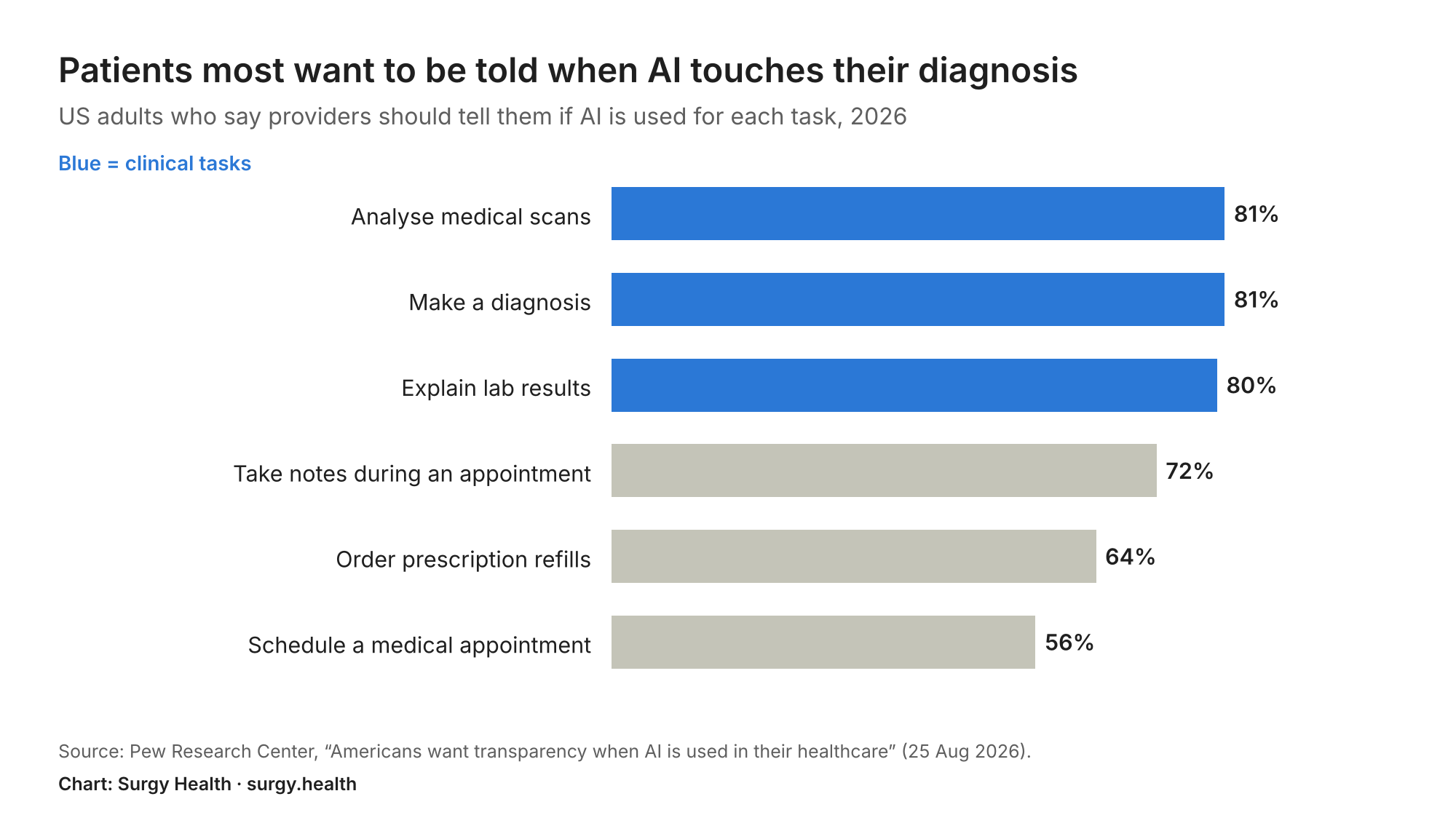
Most patients now walk in having already asked a chatbot. Hospitals that answer quickly, clearly and honestly on their own channels have a chance to win that trust back; it's the job our hospital CRM for patient journeys is built around.
Healthcare workforce shortages and the AI training gap
The case for AI in hospitals rests on a simple shortage: too few clinicians, too much of their time spent on admin. The catch is that hardly anyone is being trained to use the tools they're handed.
- 11.1 million health workers short. That's the WHO's projected global shortfall for 2030, down from 14.7 million in 2023 and concentrated in low- and lower-middle-income countries. (WHO, 2024)
- 5.8 million nurses short worldwide in 2023, a gap the WHO expects to narrow to 4.1 million by 2030. (WHO State of the World's Nursing, 2025)
- 45.2% of US physicians had at least one symptom of burnout in 2023, down from a 62.8% peak in 2021, in a national survey of 7,643 people. (Shanafelt et al., Mayo Clinic Proceedings, 2025)
- 41.9% of US physicians reported burnout in 2025, down from 53% in 2022, across about 19,000 physicians at 106 organisations. This series isn't nationally representative, so don't splice it onto the one above. (AMA, 2026)
- 68% of clinicians worldwide say their AI training is insufficient, and 60% lack confidence in how AI is governed where they work. (Elsevier Clinician of the Future, 2026)
- 70% of healthcare professionals say AI training at their organisation is unavailable, limited or inconsistent, in a 10-country survey that included India and Saudi Arabia. (Philips Future Health Index, 2026)
- 64% of healthcare professionals turn to personal AI tools when the ones at work don't meet their needs. (Philips, 2026)
- 46% of healthcare professionals say AI saves them at least 132 hours a year. (Philips, 2026)
- 76.3% of medical, dental and veterinary students across 48 countries report a lack of AI courses, and 76.1% want more AI teaching. (Busch et al., BMC Medical Education, 2024)
The 64% figure should worry any hospital leadership team: staff reach for consumer tools when the sanctioned ones fall short or nobody has shown them how. Training that is continuous and tracked, rather than a one-off workshop, is the fix, and it's what our staff training and compliance LMS is built for.
Healthcare AI investment and spending
The money has moved from experiments to line items, and most of it is chasing admin and documentation work rather than diagnosis.
- $1.4 billion was spent on healthcare-specific generative AI tools in the US in 2025, nearly triple 2024. Coding and billing automation took $450 million of it. This is Menlo's model, built on a survey of 700+ executives, not audited spend. (Menlo Ventures, 2025)
- 54% of US digital health venture funding went to AI-enabled startups in 2025, up from 37% in 2024. Total funding was $14.2 billion across 482 deals, and AI rounds were about 19% larger on average. (Rock Health, 2026)
- $11.1 billion was raised by US digital health startups in the first three quarters of 2026, across 358 deals. (Rock Health, October 2026)
- 70% of US providers and 80% of payers now have an AI strategy in place or in development, up from 60% for both a year earlier. About one in five providers has ambient documentation at full rollout. (Bain & Company and KLAS Research, 2025)
A caveat on all four: they describe the US market, and several come from firms with investments or clients in it. We found no comparable primary spending data for India or the GCC, which is itself telling.
AI in healthcare in India: digital health and AI statistics
India's AI story starts with plumbing. The country has built a national digital health backbone at a scale few others match, and AI is now being layered on top of it, in teleconsultation, claims and policy.
The digital backbone
- 97.61 crore ABHA IDs (about 976 million) are operational, with 119.95 crore health records linked to them, as of 17 September 2026. (PIB, 2026)
- Over 4.1 lakh health facilities and 6.7 lakh healthcare professionals are listed in ABDM's national registries. (PIB, February 2026)
- More than 50 crore teleconsultations (500 million) have run on eSanjeevani, the national telemedicine service, as of 17 September 2026. (PIB, 2026)
- 12 million of 282 million eSanjeevani consultations between April 2023 and November 2025 were aided by AI-recommended diagnoses, roughly 4%. (PIB, February 2026)
Claims, cost and capacity
- 48.51 crore people hold Ayushman cards under PM-JAY, which has funded about 13.25 crore hospital admissions worth ₹2.03 lakh crore across 38,000+ empanelled hospitals. (PIB, 2026)
- Nearly 50,000 PM-JAY claims a day flow through the National Health Authority across 1,900+ treatment packages, and only 15–20% are auto-adjudicated. (PIB/NHA, April 2026)
- 3,167 hospitals had been found guilty of irregularities under PM-JAY by August 2025; 1,114 were de-empanelled and 1,504 fined a total of ₹122 crore. (PIB, 2025)
- 87.50% claims paid ratio by number of claims for health insurers in 2024–25, up from 82.46% the year before, as premiums passed ₹1.2 lakh crore. (PIB, Ministry of Finance, 2026)
- 43.41% of India's total health spending came out of households' pockets in 2022–23, up from 39.4% a year earlier. (National Health Accounts 2022–23, NHSRC, 2026)
- 1 doctor per 811 people, counting AYUSH practitioners and assuming 80% of registered doctors are active, and 2.23 nurses per 1,000 people. (PIB, February 2026)
Policy and funding
- ₹10,371.92 crore is the five-year outlay of the IndiaAI Mission, which has built up 38,000 GPUs of shared compute. (PIB, 2025)
- ₹990 crore funds three AI Centres of Excellence, one of them for healthcare, from FY2023–24 to FY2027–28. (PIB, 2024)
- February 2026 saw the launch of SAHI, India's Strategy for AI in Healthcare, alongside BODH, a federated platform where developers train models on-site without touching raw patient data. (PIB, July 2026)
- 10 ethical principles govern AI in biomedical research and healthcare under ICMR's 2023 guidelines, which require that humans keep full control of medical decisions. (ICMR, 2023)
- 18 months and ₹250 crore. The DPDP Rules, notified in November 2025, give organisations an 18-month phased compliance window, with penalties of up to ₹250 crore for failing to maintain reasonable security safeguards. (PIB/MeitY, 2025)
The 15–20% auto-adjudication figure is the one we'd circle. It means most of the 50,000 daily PM-JAY claims still need a human reviewer, and clean, complete claim files are what keep them moving. That's the gap our claims and TPA reconciliation work targets. We've written more on what an AI-first hospital in India and the GCC looks like.
AI in healthcare in the GCC: Saudi Arabia, the UAE and the region
The Gulf is building virtual care and health data exchange at national scale, and its regulators are writing AI rules early. Public numbers on AI use inside hospitals are still scarce, so most of what follows measures the infrastructure AI will run on.
Saudi Arabia
- 241 hospitals and more than 1,400 health centres are connected to the SEHA Virtual Hospital, which offers 114 specialties and sub-specialties. (Saudi Ministry of Health, August 2026)
- More than 16 million virtual appointments and consultations ran through SEHA Virtual Hospital in 2025, and virtual clinic appointments grew 56% to 11.5 million. (Saudi MoH, January 2026)
- Over 31 million users were on Sehhaty, the national health app, in 2025. (Saudi MoH, August 2026)
- 57% of doctors and 56% of nurses working in Saudi Arabia in 2023 were non-Saudi (64,813 of 113,300 doctors; 119,089 of 213,110 nurses), by our calculation from official counts. (GASTAT, 2023)
- January 2023 is when the Saudi Food and Drug Authority issued dedicated guidance (MDS-G010) for AI- and machine-learning-enabled medical devices. (SFDA)
United Arab Emirates
- 3.5 billion clinical records and 12.7 million unique patient profiles sit on Malaffi, Abu Dhabi's health information exchange, which connects 3,072 facilities and 53,476 authorised users. (Malaffi, 2025)
- 2.7 billion medical records for 11.6 million patients were held on Riayati, the federal health ministry's platform, across more than 3,850 facilities in 2023. (Abu Dhabi Media Office, 2023)
- October 2025 brought Abu Dhabi's Responsible AI Standard, binding on every licensed healthcare entity. It bans "very high" risk AI outright and requires conformity assessments for high-risk AI both before and after deployment. (Department of Health Abu Dhabi, 2025)
- 1 of 9 priority sectors. Health has been a named priority of the UAE's national AI strategy since its launch in October 2017. (UAE Government)
Two things stand out. Regulation is arriving ahead of local evidence, so GCC hospital groups will need to show conformity, not just buy software. And when more than half of doctors and nurses are recruited from abroad, AI tools need to be quick to learn and training needs to keep pace.
AI governance, safety and regulation statistics
Safety bodies now rank AI as healthcare's top technology risk, while the rules meant to manage it keep shifting. Hospitals are mostly governing AI themselves in the meantime.
- #1 health technology hazard, two years running. ECRI ranked AI-enabled health technologies first for 2025 and misuse of AI chatbots first for 2026. (ECRI, 2024; ECRI, 2026)
- #1 patient safety concern for 2026 is "navigating the AI diagnostic dilemma", up from second place for insufficient AI governance in 2025. (ECRI, 2026)
- 88% of physicians say robust safety and efficacy validation is important before they adopt an AI tool. (AMA, 2026)
- 74% of AI-using US hospitals evaluated their predictive models for bias in 2024, and 82% for accuracy, though fewer did so for all or most of their models. (ASTP/ONC, 2025)
- 66% of AI-using US hospitals named a dedicated committee or task force as accountable for evaluating predictive AI in 2024. (ASTP/ONC, 2025)
- 8% of countries in the WHO European Region have a dedicated national AI-for-health strategy, and 8% have AI liability standards, yet 64% already use AI-assisted diagnostics. 86% name legal uncertainty as the main barrier. (WHO Europe, 2025)
- 40+ recommendations for governments, developers and providers make up the WHO's 2024 guidance on large multi-modal models in health. (WHO, 2024)
- 2 August 2028 is now when EU AI Act rules for AI embedded in products such as medical devices apply, after the Digital Omnibus took effect on 27 July 2026. Other high-risk AI rules apply from 2 December 2027. (European Commission; EUR-Lex)
- 31 source attributes must be disclosed for predictive decision-support tools in certified US health IT since 1 January 2025, under the HTI-1 rule. HTI-5, proposed in December 2025, would remove these "model card" requirements. (ASTP/ONC; HTI-5)
- More than 1,000 AI bills went before US state legislatures in 2025, and at least 10 states enacted AI laws in the health sector. (NCSL, 2026)
- 7 elements make up the first joint US guidance on responsible AI use from the Joint Commission and the Coalition for Health AI, which reaches more than 22,000 accredited organisations. (Joint Commission and CHAI, 2025)
- 17.7% to 46.5%. Removing racial bias from a widely used US care-management algorithm would raise the share of Black patients flagged for extra help from 17.7% to 46.5%. (Obermeyer et al., Science, 2019)
- 242.9 million people were affected by 663 large US health-data breaches (500+ people each) that occurred in 2024, and the Change Healthcare attack alone hit about 192.7 million. Every AI tool that touches patient data widens this surface. (HHS Office for Civil Rights)
If you're choosing AI vendors right now, ask for their validation evidence, bias testing and data-handling terms before you ask for a demo. Our hospital AI buyer's guide goes deeper on what to ask.
What these numbers mean for hospital leaders
Taken together, the data points to five practical moves, whether you run a 100-bed hospital in Patna or a group in Riyadh.
- Start where the time goes. Doctors rank admin relief as AI's biggest opportunity, and US spending follows: $600 million on ambient documentation and $450 million on coding and billing in 2025. Notes, claims and front-desk calls are the safest first projects, which is where an AI medical scribe, claims reconciliation and an AI voice agent fit.
- Don't let size decide who benefits. Independent hospitals use predictive AI at less than half the rate of system hospitals (37% vs 86%). Mid-sized hospitals need tools that work without a data science team, such as plain-language analytics over their own data.
- Tell patients, before they ask. 72% of adults want to know when AI is used in their care, and 46% aren't sure whether it already has been. Build disclosure into routine patient communication, through your patient engagement CRM or otherwise.
- Train before you deploy. 68% of clinicians say their AI training falls short, and 64% of health workers reach for personal AI tools when work ones disappoint. Continuous, tracked training, for example through a healthcare LMS, closes that gap faster than a launch-day workshop.
- Govern from day one. AI is ECRI's top technology hazard, and a quarter of AI-using US hospitals don't test their models for bias at all (74% do). Set up evaluation and monitoring before the first go-live, not after the first incident. Our buyer's guide covers what to ask vendors.
Frequently asked questions
How many doctors use AI?
81% of US physicians reported awareness or use of AI in their practice in 2026, according to the AMA's survey of 1,692 physicians. 72% use it for at least one task, up from 38% in 2023. Worldwide, 49% of clinicians say they use AI for work (Elsevier, 2026).
What percentage of hospitals use AI?
71% of US non-federal acute care hospitals used predictive AI integrated with their EHR in 2024, according to ASTP/ONC, and 31.5% had generative AI built into their EHR. Adoption ranges from 96% at large hospitals to 37% at independent ones.
How many FDA-approved AI medical devices are there?
1,614 AI-enabled medical devices were on the FDA's list as of its 4 September 2026 update, by our count. The FDA authorised a record 335 of them in 2025, and 76.2% of all listed devices are radiology tools.
Do AI scribes reduce physician burnout?
Yes, modestly. Burnout fell from 51.9% to 38.8% after 30 days with an ambient scribe in a six-system study, and two randomised trials found smaller but significant cuts in note-writing time and work exhaustion.
Do patients trust AI in healthcare?
Not much yet. 65.8% of US adults have low trust that their health system will use AI responsibly, only 4% of recent AI health-tool users strongly trust its accuracy, and 72% want to be told when AI is used in their care.
How is AI used in Indian healthcare?
Mostly on top of national digital infrastructure: 97.61 crore ABHA IDs, more than 50 crore eSanjeevani teleconsultations (some aided by AI-recommended diagnoses), and PM-JAY claims, where only 15–20% of roughly 50,000 daily claims are auto-adjudicated. India launched SAHI, its strategy for AI in healthcare, in February 2026.
Where is AI used most in healthcare?
Among regulated devices, radiology dominates, with 76.2% of FDA-listed AI devices. In everyday hospital operations, it's paperwork: billing automation, scheduling and clinical documentation are the fastest-growing uses.
How to cite this page
Use any statistic or chart here, with a link back to this page.
- This page: Surgy Health. "AI in Healthcare Statistics 2026." surgy.health, updated 14 October 2026. https://surgy.health/blog/ai-in-healthcare-statistics
- Our FDA analysis: Surgy Health analysis of the US FDA AI-Enabled Medical Devices list (4 September 2026 update), https://surgy.health/blog/ai-in-healthcare-statistics
- Charts: free to embed or republish with the credit "Chart: Surgy Health" and a link to this page.
For every other number, cite the original source linked beside it, as we have.
References
- US FDA — Artificial Intelligence-Enabled Medical Devices list (September 2026); generative AI devices consultation (August 2026). https://www.fda.gov/medical-devices/artificial-intelligence-enabled-medical-devices/list-artificial-intelligence-enabled-medical-devices
- ASTP/ONC — Data Brief No. 80, Hospital Trends in the Use, Evaluation, and Governance of Predictive AI, 2023–2024 (September 2025). https://healthit.gov/data/data-briefs/hospital-trends-use-evaluation-and-governance-predictive-ai-2023-2024/
- AMA — Physician AI Sentiment Report 2026; 2024 AI survey; Prior Authorization Physician Survey; Physician burnout 2025. https://www.ama-assn.org/system/files/physician-ai-sentiment-report.pdf
- Pew Research Center — Americans want transparency when AI is used in their healthcare (2026); AI chatbots for health (2026); AI in health care (2023). https://www.pewresearch.org/short-reads/2026/08/25/americans-want-transparency-when-ai-is-used-in-their-healthcare/
- Government of India (PIB) — UHC backgrounder (September 2026); AI in healthcare delivery (February 2026); ABDM explainer (July 2026); PM-JAY updates; IndiaAI Mission; DPDP Rules 2025. https://www.pib.gov.in/PressReleasePage.aspx?PRID=2313393®=48&lang=2
- Saudi Ministry of Health — SEHA Virtual Hospital updates (January and August 2026); GASTAT healthcare workforce statistics 2023; SFDA MDS-G010. https://www.moh.gov.sa/en/ministry/mediacenter/news/pages/news-2026-01-27-002.aspx
- Department of Health Abu Dhabi — Responsible AI Standard (2025); Malaffi 3.5 billion clinical records (2025); Abu Dhabi Media Office, Riayati (2023). https://www.doh.gov.ae/-/media/Feature/Resources/Standards/2025/Responsible-AI-Standard-V1.ashx
- Peer-reviewed journals — JAMA, JAMA Network Open, JAMA Internal Medicine, JAMA Health Forum, JAMA Neurology, NEJM AI, Nature Medicine, Nature, Nature Communications, The Lancet, Lancet Digital Health, npj Digital Medicine, BMC Medical Education, Mayo Clinic Proceedings, Annals of Internal Medicine, Annals of Family Medicine, Journal of General Internal Medicine, Digital Health, Science, JAMIA. Individual DOIs are linked beside each statistic above.
- Primary research organisations — Elsevier Clinician of the Future 2026; Philips Future Health Index 2025–2026; Menlo Ventures State of AI in Healthcare 2025; Rock Health; McKinsey; Bain & Company and KLAS Research; Peterson Health Technology Institute; HFMA; CAQH Index 2025; ECRI; Stanford HAI AI Index 2026; NCSL; Joint Commission and CHAI; KFF; Gallup and West Health; OpenAI (company-reported).
Written by
Mohammed Jamil Nasir
Founder — Product & Tech, Surgy Innovation Labs Private Limited
14+ years in Product, Design & Tech · PGC AI/ML, IIT-Guwahati · Global MBA, SP Jain · BE-CSE
Mohammed Jamil Nasir leads product and technology at Surgy Innovation Labs Private Limited, building AI-first, seamless healthcare products for hospitals and healthcare networks across India and the GCC. He writes about healthcare AI, accreditation, and clinical operations.
Connect on LinkedInKeep reading

Building the AI-First Hospital: Inside Surgy Health's Vision for Healthcare in India and the GCC
Inside Surgy Health’s AI-first vision for connected clinical, patient, workforce, revenue and operational workflows across hospitals in India and the GCC.

Reducing TPA Claim Rejections in India: Why Most "Rejections" Are Actually Process Failures
Why preventable TPA claim losses often begin with missed queries, unmatched payments and invisible deduction patterns — and the operating controls hospitals can put in place now.